

Advantages Of High And Low Voltage Distribution Boxes
Mar 20, 2026
Leave a message
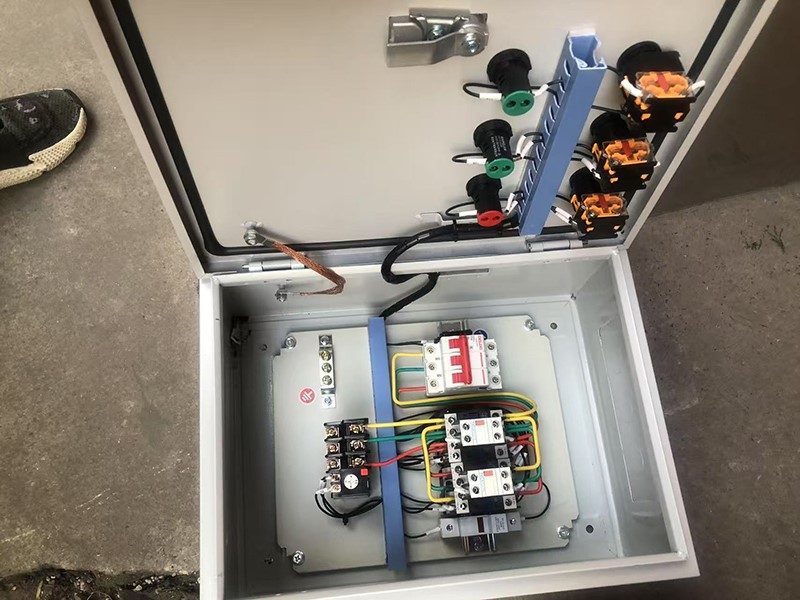
High and low voltage distribution boxes offer numerous advantages in power systems, including centralized control, safety protection, and stable power supply. They are widely used in industrial plants, commercial buildings, residential communities, and infrastructure projects. Their most significant feature is their ability to uniformly distribute and manage electrical energy. Through internal circuit breakers, disconnectors, relay protection, and monitoring devices, they achieve effective control of lines and equipment. When a short circuit, overload, leakage, or voltage abnormality occurs, the distribution box can quickly disconnect the faulty circuit, preventing the escalation of electrical accidents and improving the safety and reliability of the entire power supply system. Furthermore, the compact structure and standardized wiring of high and low voltage distribution boxes effectively reduce wiring clutter, facilitate later maintenance and troubleshooting, and lower operating and management costs.
With the development of power automation technology, modern high and low voltage distribution boxes also possess advantages such as intelligence, energy saving, and remote monitoring. The equipment can collect real-time operating data such as current, voltage, power, and temperature through intelligent instruments and communication modules, enabling remote monitoring and fault early warning, thus improving operation and maintenance efficiency. Some intelligent distribution systems can also automatically analyze load changes, optimize power distribution, reduce energy waste, and improve power supply efficiency. Furthermore, high and low voltage distribution boxes offer strong protection, typically featuring dustproof, moisture-proof, and corrosion-resistant functions, enabling them to adapt to complex industrial environments and long-term continuous operation requirements. Through standardized and modular design, equipment installation is more convenient, and future expansion and upgrades are more flexible, meeting the development needs of power systems of different sizes.
Send Inquiry