

Application areas of functional distribution boxes
Apr 19, 2026
Leave a message
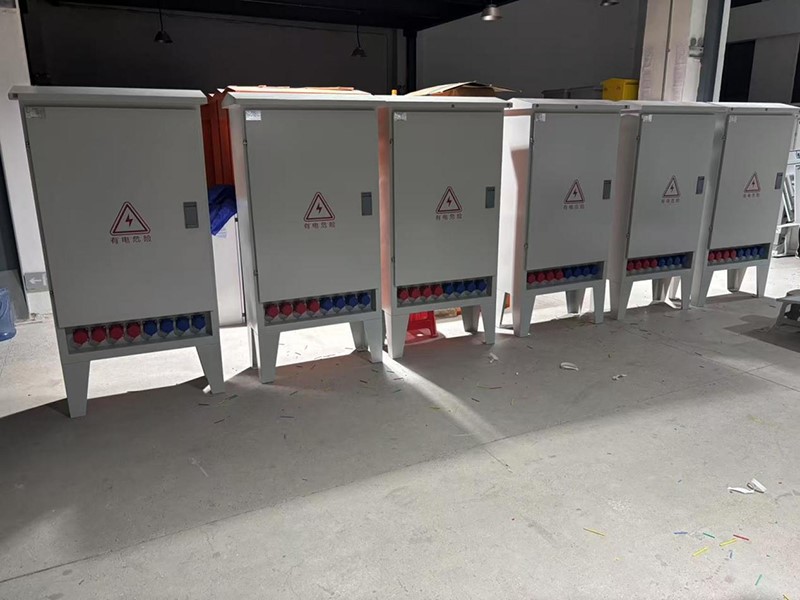
Functional distribution boxes are widely used in industrial manufacturing and are crucial equipment for achieving safe power supply and automated control in modern factories. In industries such as machining, food production, electronics manufacturing, and chemicals, distribution boxes not only distribute power but also provide centralized control and protection for equipment operation. For example, in automated production lines, functional distribution boxes typically integrate circuit breakers, contactors, PLC control modules, frequency converters, and monitoring instruments, enabling unified management of motor start/stop, equipment linkage, overload protection, and fault alarms. Compared to traditional power distribution equipment, functional distribution boxes effectively improve production stability, reduce downtime, and lower manual maintenance costs. Furthermore, with the development of industrial intelligence, more and more companies are adopting intelligent distribution boxes with remote monitoring and data acquisition capabilities, enabling real-time uploading of equipment operation data and improving factory energy management efficiency.
Functional distribution boxes also play a vital role in commercial buildings and public infrastructure. Large shopping malls, office buildings, hospitals, schools, subway stations, and airports, with their diverse and complex electrical equipment and loads, demand high levels of safety and stability in their power supply systems. Therefore, they require distribution boxes with zoned control and intelligent protection functions. These distribution boxes can independently manage power supply according to the electricity needs of different areas. For example, lighting systems, fire protection systems, central air conditioning, elevator equipment, and security monitoring systems can all be categorized, controlled, and isolated for faults using functional distribution boxes. If a short circuit or overload occurs in a certain area, the system can quickly disconnect the faulty line to prevent disruption to the overall power supply, thus ensuring the safety of equipment and personnel within the building. Furthermore, modern buildings increasingly emphasize energy-saving management, and some intelligent functional distribution boxes also possess functions such as energy metering, load analysis, and remote operation and maintenance, providing strong support for smart building construction.
In the fields of new energy and municipal engineering, the application of functional distribution boxes is also becoming increasingly widespread. With the rapid development of industries such as photovoltaic power generation, wind power generation, and new energy vehicle charging piles, power distribution systems are facing higher requirements for equipment stability, protection levels, and intelligent management. For example, in photovoltaic power plants, functional distribution boxes can perform tasks such as power collection, line protection, lightning protection grounding, and inverter control, ensuring the long-term stable operation of the power generation system. In new energy vehicle charging stations, distribution boxes are responsible for power distribution, leakage protection, power monitoring, and intelligent control of charging equipment, ensuring the safety and reliability of the charging process. Meanwhile, in municipal engineering projects such as urban road lighting, sewage treatment, water pumping stations, and communication base stations, functional distribution boxes also undertake important tasks of power control and operational protection. Since most of these scenarios are located outdoors, the equipment typically needs to be waterproof, dustproof, and corrosion-resistant to meet the long-term operational needs of complex environments.
Send Inquiry